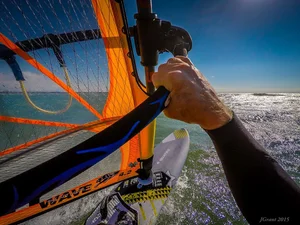
An update for aging minds as we windsurf mindfully into the future - and help remembering where we put the essential baggage of life, both at home and away ~> aka keys, wallet, phone, whatever…
Just two years ago, on January 15, 2024, I wrote in this journal about mindfulness and keeping track of the essentials: wallet, cellphone, keys, and the other small items that have an uncanny ability to disappear just when we need them most.
Looking back, I realise this has been a work in progress for much longer.
More than a decade ago, I hung a well-placed reminder inside our garage:
DON'T FORGET! Keys, cellphone, wallet, hat, etc. Do not leave them in the van.
It actually began back in 1965, when I was 25. On moving into our second apartment, I hung my car and apartment keys on a hook beside the entrance. That little decision saved me at least five minutes of frantic searching before leaving for school the following morning.
Five minutes may not sound like much. But when you're kind of already late, five minutes can feel like a significant portion of your remaining life!
As we age, our memories sometimes need a little assistance. Memory changes are common in later life, but significant or worsening changes deserve to be taken seriously. A sensible routine can help us manage everyday forgetfulness, although it is no substitute for medical advice when memory problems become concerning.
So, let's be clear about who's writing this.
I'm an 86-year-old windsurfer who cycles, hikes, walks daily, plays golf, works out regularly, and would like to continue windsurfing for years to come. I've been windsurfing for 46 years, and am not quite ready to let a misplaced pair of prescription sunglasses decide when the adventure ends!
Like many people my age, I occasionally need a nudge to remember where something belongs. My aim is to maintain my independence, keep my mind working as well as possible, and spend less time searching for things and more time enjoying life.
The terminology of getting older
At 86, I qualify as an octogenarian and fall within the demographic often called the oldest-old, generally referring to people aged 85 and over. Terminology varies, but the numbers are straightforward enough.
The more interesting question is not what we call ourselves, but how well we can continue to live.
I prefer to think of it as advancing old age: another season of life in which we keep adapting, learning, and finding ways to do the things that matter to us.
For an adventurous, physically active person, staying healthy is important. So is maintaining the mindset that helps us keep going.
I'm trying to develop a simple, mindful survival policy for everyday life. Some of the following may seem obvious. That's fine. The little routines that have helped me this far are worth keeping.
The golden rule: Everything has a place.
Here are the two principles at the heart of my plan:
Everything in my everyday life has a place.
Everything should be returned to its place - or to another clearly defined, obvious place where I can find it.
That's it. Simple enough to remember, you might think!
Wallet, cellphone, keys, tools, glasses, sunglasses, sunscreen, water, gear, clothing, and other essential gear all need a designated home. When I need them, I want to know where they are without having to conduct a search operation.
Here's how I put the plan into practice.
1. Keys and wallet
My wallet and keys always go in their designated pockets: one on the right, the other on the left. At night, I account for everything and return it to its proper resting place before going to bed.
That way, the following morning begins with a plan rather than a treasure hunt.
2. Doors, locks, and other things that need checking
When leaving home, I check to know if the doors and garage are locked. I've developed a little sequence to help reinforce the memory of having done so.
I kiss the key that locks the door, tap it on my head three times, and watch the garage door close completely. Sometimes I flash the vehicle's lights towards the door as a final visual cue.
Yes, I really do this! I remember the kiss and the flash, maybe not turning the key.
The kiss, the taps, and the visual check turn an ordinary action into a small, memorable routine. The point is not the ceremony itself, but giving the brain something distinctive to associate with the action. Not just - did I lock the back door?
And don't forget to fully close the freezer door. My reminder for that one is simple: Push it shut and tap it twice - (say) ice!
A little silliness can be surprisingly useful when it helps a habit stick.
3. Glasses, prescription sunglasses, and other eyewear
All my eyewear has designated storage places. Depending on what I'm doing, that might be a drawer or a particular spot with one within one of my helmets, along with a cap, or a head sun guard.
Glasses, sunglasses, sports and swim glasses are never simply taken off and put down wherever I happen to be standing. I return them to one of the same four locations whenever I remove them, or let them hang around my neck when I'm using a keeper strap..
The important thing is consistency. If I put them down in (any one of six designated) convenient places today, I have only six known places to search tomorrow.
4. The cellphone
Ideally, the cellphone stays with me. If I need to leave it behind, it goes to a predetermined, obvious checkpoint.
In an emergency, I may place my wallet and keys by the front or back door. Otherwise, the phone belongs on its charger or in its usual designated place.
The phone is too useful to become another missing-person case even though I’d guilty of not immediately checking incoming calls and the 5 different message and mail apps.
5. Being away from home
When I'm travelling or spending time outdoors, keeping everything organised becomes even more important. I carry a small pail or a tool tote, and a shoulder bag to help keep personal belongings and equipment together.
The principle remains the same whether I'm at home, preparing for a hike, getting ready to golf, or heading out to windsurf.
A place for everything, and everything accounted for.
What happens when something goes missing?
Here's where the plan gets a little more athletic.
If an item isn't where it should be and I have to search for it, there's a penalty.
Twenty push-ups. Twenty uphauls. Twenty squats. Twenty abdominal exercises and planks. Twenty biceps or leg curls that will all be done - before sunset.
I'm not making this up!
Of course, the exercises are a personal motivational device, not a medically approved treatment for forgetfulness. And I reserve the right to modify the penalty according to the circumstances. There's no point injuring yourself while trying to find your reading glasses.
The idea is to reinforce the habit, not turn a misplaced wallet into an Olympic training event.
It takes time and persistence to establish these routines. But gradually, the searching becomes less frequent, the stress diminishes, and the system begins to work almost automatically.
Where there's a will, there's usually a creative way to make a good habit easier to remember.
A notebook still has its place
I also carry a notebook and pen for new names, music I hear and like for possible upload, things I need to do, and anything else worth remembering.
There's no shame in using reminders, lists, notebooks, calendars, or technology. We already use tools to help us see, hear, travel, and communicate. Why not use them to make everyday life easier?
And for the record, I appreciate that an AI assistant can help organise information and retrieve details within the context available to it - when and as needed. But even AI systems have limitations, and I wouldn't want anyone to mistake that capability for human memory or perfect recall.
Perhaps this is one of those useful human - AI partnerships: I bring the lived experience and the practical idea; AI can help organise, refine, and communicate it so that others might benefit. AI can do a deeper dive into seeking a location, validation, travel issues, help diagnose car fault computer issues, or find my lost earbud that somehow slipped out of my ear, and so much more…
The ultimate goal is not to remember every little thing through sheer mental effort. It's to build a reliable system that reduces the number of important things we need to remember in the first place.
It's about consistency, not perfection
This is not a grand theory of aging. It's simply a practical plan that works for me.
Keep important things in designated places. Return them there after use. Establish a few memorable routines. Use a notebook or other reminders when needed. And if something goes missing, pause and think about the system rather than immediately blaming your memory.
These habits cannot prevent dementia or reverse serious cognitive impairment. People living with advanced Alzheimer's disease or other forms of dementia may need very different kinds of support. But for those who can still establish and follow everyday routines, the approach may be worth trying.
If memory problems are becoming more frequent, interfere with daily activities, or concern you or your family, discuss them with a healthcare professional. Don't assume that every change is simply a normal consequence of getting older.
For the rest of us, there's no need to make life more complicated than it already is.
Everything has a place. Put it back or stow it in a carry tote. Know where to find it. Get on with living.
One day at a time, one season at a time, and if the wind cooperates - it’s another day on the water.
P.S. Finding misplaced golf balls is an entirely different matter. I've yet to devise a system that can tell me where they went. Even AI may need a little help with that one!
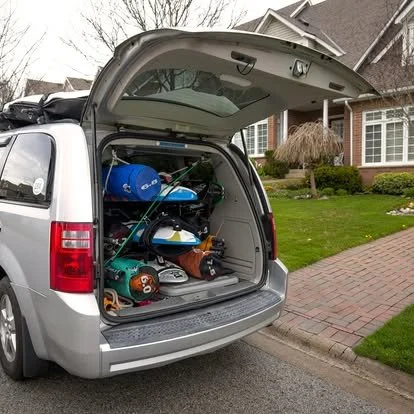
At a glance, it’s all there, and has a pre designated placement so everything is visually visible, not just tossed anywhere …
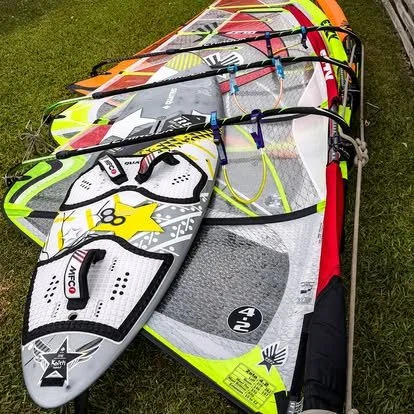
Stacked, rigged and ready…
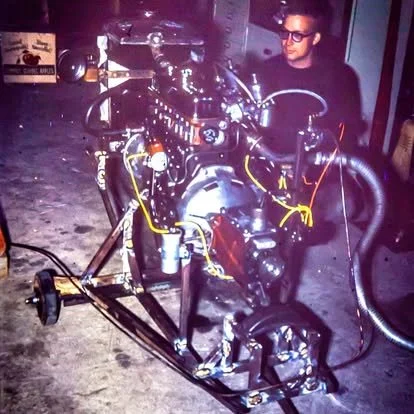
Everything exactly in its place - runs smoothly…